

Quick answer
Hairline plaster cracks are usually harmless shrinkage; diagonal cracks wider than 3 mm, cracks in beams or columns, or cracks that keep growing indicate structural problems and need an engineer's inspection.
On this page
Key takeaways
- Hairline: cosmetic
- Diagonal >3 mm: investigate
- Beam/column cracks: urgent
- Monitor with tell-tales
01Hairline vs diagonal cracks
Not all cracks mean the same thing, and the first job is telling cosmetic shrinkage apart from structural distress. Hairline cracks under roughly 1.5 mm, appearing in a random map-like pattern across a plastered wall and not aligned with any beam or column, are almost always plaster shrinkage from a rich sand-cement mix or inadequate curing — unsightly but structurally harmless, fixable with a simple crack filler and repaint. Diagonal cracks wider than 3 mm, especially running at roughly 45 degrees from the corners of doors and windows, are a different matter: they typically indicate differential settlement of the foundation beneath different parts of the wall, or movement in the structure that's concentrating stress along that diagonal line, and need an engineer's look before simply filling and repainting over them.
02Cracks in beams and columns: the urgent category
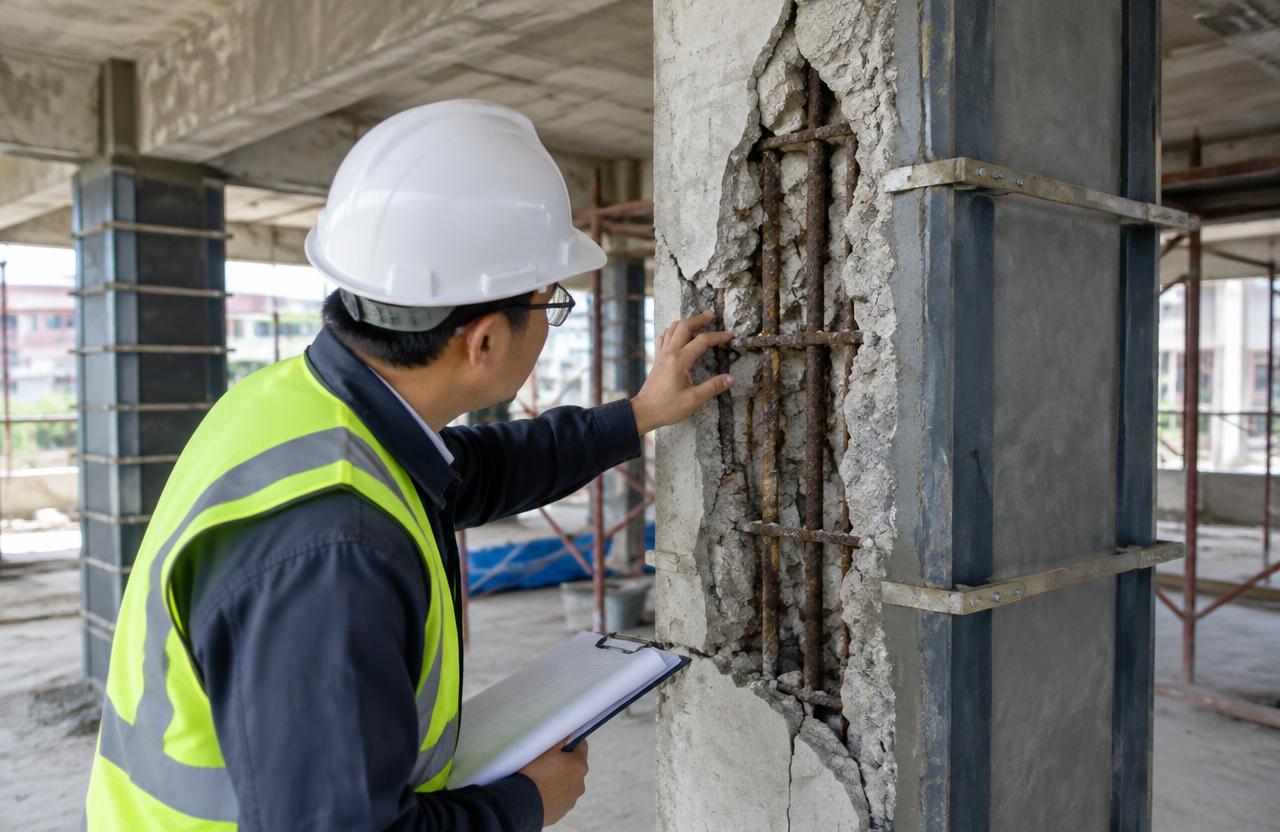
Cracks that appear in or near RCC beams and columns themselves — as opposed to the brick infill walls between them — are the most urgent category. A horizontal crack at a beam-column junction, or a vertical crack running up a column, can point to overloading, rebar corrosion causing concrete spalling from the inside out, or a construction defect in that member's original casting, any of which affects the building's load path and should prompt an immediate structural assessment rather than a cosmetic patch.
03How to tell if a crack is still moving
For any crack of uncertain cause, the standard diagnostic is a tell-tale: a thin strip of glass or a simple crack-monitoring gauge fixed across the crack. If the glass stays intact over several weeks to months, the crack is dormant and likely safe to repair cosmetically; if it breaks or the gauge shows continued widening, the crack is active and the underlying cause — settlement, moisture, or structural distress — needs to be identified and treated before any surface repair, because painting over an actively moving crack only hides the problem until it reappears, usually worse.
04How this applies to your project
Every plot is different — soil, access, approvals and budget change the right answer. PuneConstructions's engineers review your site and drawings and explain the options with costs, so you can decide with confidence.
Get a free site visit in Pune, PCMC & nearby
PuneConstructions is a civil construction company and turnkey contractor serving Pune, PCMC & nearby and the wider Pune region since 2009. Share your plot or building details and a project engineer will visit, check feasibility and send a line-item BOQ within 7 working days — no obligation.
Frequently asked questions
I have a crack right at the corner of my bedroom window — is this dangerous?
A diagonal crack running at roughly 45 degrees from a door or window corner, especially if wider than 3 mm, typically indicates differential settlement or structural movement rather than simple plaster shrinkage, and should be checked by an engineer rather than just filled and repainted. A thin hairline crack under 1.5 mm in a random map pattern, by contrast, is usually just cosmetic shrinkage.
How do I know if a crack is still active or if it has stopped moving?
Fix a tell-tale — a thin strip of glass or a simple crack-monitoring gauge — across the crack and check it after several weeks to months. If it stays intact, the crack is dormant and likely safe to repair cosmetically; if it breaks or the gauge shows continued widening, it's still active and the underlying cause needs to be identified before any surface repair.
Should I worry about a crack in a column, even a thin one?
Yes — any crack in or near an RCC beam or column, even a fine vertical crack in a column, is in a different risk category from cracks in brick infill walls, since it can point to overloading, internal rebar corrosion, or a casting defect affecting the structure's load path. This needs an immediate structural assessment rather than cosmetic filling.
Does PuneConstructions help with this?
Yes. We offer free site visits, feasibility advice and a line-item BOQ across Pune, PCMC, Panchgani, Mahabaleshwar, Bhor and nearby areas.
Where do you work?
Pune city and old peths, PCMC, Chakan–Talegaon, Lonavala, Mulshi, Bhor, Panchgani, Mahabaleshwar and surrounding towns.