

Quick answer
Rainwater harvesting is required for many new buildings in Pune and can recharge borewells or fill storage tanks. Plan pipes, filters and recharge pits during design.
On this page
Key takeaways
- Roof-top collection
- Filters and first flush
- Recharge pits or tanks
- Low cost if planned early
01How Rainwater Harvesting Actually Works
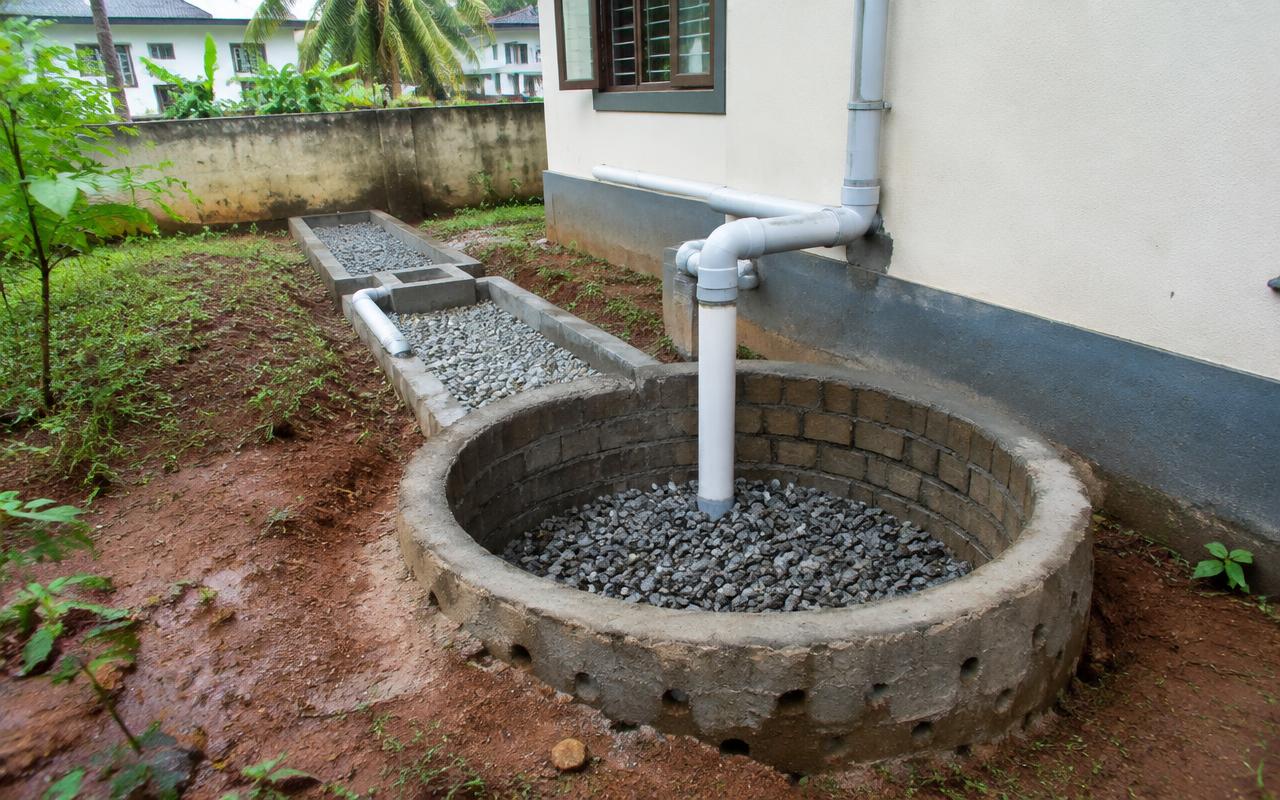
Rainwater harvesting (RWH) is mandated under PMC and PCMC building bye-laws for most new constructions above a certain plot size (commonly plots over 300 sq.m, though the exact threshold has shifted across UDCPR revisions), and it is checked at the plinth-completion and occupancy-certificate stages, not just on paper at sanction. The basic mechanism is simple: roof runoff is collected through gutters and down-take pipes, passed through a filter chamber to remove leaves and silt, and then either diverted into a recharge pit/trench that lets water percolate back into the soil to feed the groundwater table and nearby borewells, or stored in an underground sump for direct reuse in flushing, gardening, or car washing. A 'first-flush' diverter — a simple valve or chamber that discards the initial few litres of runoff carrying roof dust and bird droppings — is a small addition that significantly improves water quality for storage systems.
02Sizing Recharge Pits and Recharging Borewells
Recharge pits are typically 1-2 metres in diameter and 2-3 metres deep, filled in layers of boulders, gravel, and coarse sand from bottom to top to filter water as it percolates, and are sized roughly on the basis of roof area — a common rule of thumb in Pune's basalt-and-murum soils is about 1 pit per 100 sq.m of roof catchment, though actual sizing should follow the percolation rate found on site. For societies with borewells, directing filtered rainwater into a recharge well near the borewell (not directly into the borewell casing unless it is specifically designed as a recharge well) measurably improves water table recovery over successive monsoons, which matters in Pune's drier western suburbs where borewell yields drop sharply by April-May.
03Cost: Plan Early or Pay More Later
The cost argument is straightforward: RWH is cheapest when designed into the drawings before plinth level, because pipe runs, pit locations and filter chamber positions can be planned without later cutting into finished paving or compound walls. A basic RWH system for a bungalow (roof area 150-250 sq.m) typically costs ₹25,000-₹60,000 depending on pit depth and filter quality, while retrofitting the same system after the compound is paved and landscaped can cost two to three times as much due to breaking and relaying hardscape. Owners should also budget for annual desilting of the filter chamber before monsoon — a five-minute job if accessible, but often neglected because the chamber is buried under decorative paving with no visible manhole cover.
04How this applies to your project
Every plot is different — soil, access, approvals and budget change the right answer. PuneConstructions's engineers review your site and drawings and explain the options with costs, so you can decide with confidence.
Get a free site visit in Pune, PCMC & nearby
PuneConstructions is a civil construction company and turnkey contractor serving Pune, PCMC & nearby and the wider Pune region since 2009. Share your plot or building details and a project engineer will visit, check feasibility and send a line-item BOQ within 7 working days — no obligation.
Frequently asked questions
Is rainwater harvesting legally compulsory for my house in Pune, or just recommended?
RWH is mandated under PMC and PCMC building bye-laws for most new constructions above a certain plot size (commonly plots over 300 sq.m, though thresholds have shifted across UDCPR revisions), and it is actually checked at plinth-completion and occupancy-certificate stages. It's worth confirming the current threshold for your plot size with your architect since it isn't just a design suggestion — it affects your OC.
How big does a rainwater recharge pit need to be for an average bungalow?
Recharge pits are typically 1-2 metres in diameter and 2-3 metres deep, filled in layers of boulders, gravel and coarse sand to filter water as it percolates. A common sizing rule of thumb in Pune's basalt-and-murum soils is roughly one pit per 100 sq.m of roof catchment area, adjusted based on actual percolation rate on site.
How much does it cost to add rainwater harvesting after the house is already built, versus planning it from the start?
A basic RWH system for a bungalow with 150-250 sq.m roof area typically costs ₹25,000-₹60,000 when planned into the drawings before plinth level, since pipe runs and pit locations can be laid out without disturbing finished work. Retrofitting the same system after the compound is paved and landscaped can cost two to three times as much because of breaking and relaying hardscape.
Does PuneConstructions help with this?
Yes. We offer free site visits, feasibility advice and a line-item BOQ across Pune, PCMC, Panchgani, Mahabaleshwar, Bhor and nearby areas.
Where do you work?
Pune city and old peths, PCMC, Chakan–Talegaon, Lonavala, Mulshi, Bhor, Panchgani, Mahabaleshwar and surrounding towns.