
Quick answer
Before every concrete pour, check formwork, rebar size and spacing, cover blocks, and cleanliness; after pouring, check curing for at least 7–14 days and get cube tests.
On this page
Key takeaways
- Rebar as per drawing
- Cover blocks in place
- Vibrate concrete
- Cube tests at 7 and 28 days
01What to Check Before the Concrete Pour
RCC quality control splits cleanly into before-the-pour and after-the-pour checks, and owners who only inspect the finished, cured concrete have already missed the stage where most defects actually originate. Before a pour, the formwork needs to be checked for rigidity (it shouldn't bulge or shift once concrete pressure is applied), dimensional accuracy, and cleanliness — any loose debris, wood chips, or standing water left in the formwork gets trapped in the concrete and becomes a weak point or honeycombing defect. Rebar needs to be verified against the structural drawing for both bar diameter and spacing, since undersized or wrongly spaced reinforcement is invisible once concrete is poured and can only be caught at this stage; cover blocks (small spacers that hold reinforcement at the correct distance from the formwork face) must be in place at the specified spacing to guarantee the design cover is actually achieved, protecting the steel from future corrosion.
02Why Vibration During Pouring Matters
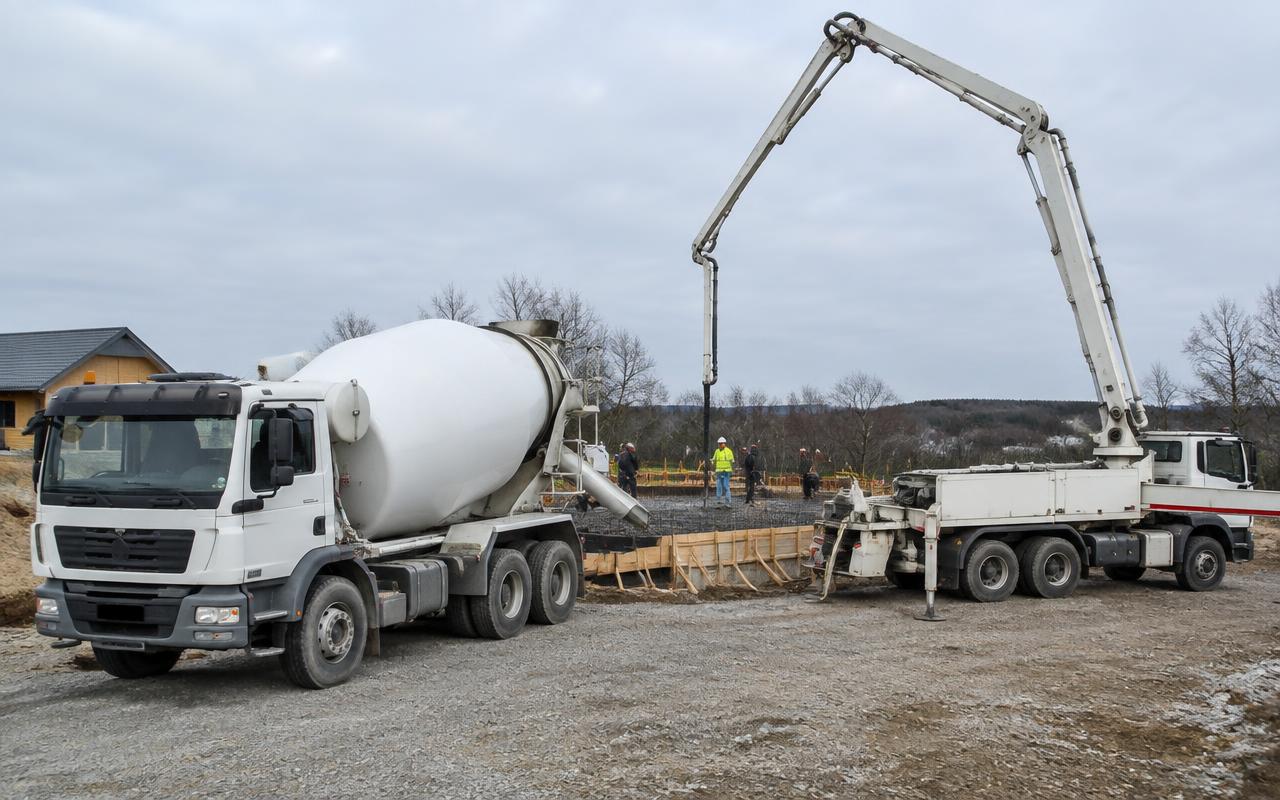
During the pour itself, mechanical vibration of the concrete is what eliminates air voids and ensures it fully encases the reinforcement and fills every corner of the formwork — concrete poured without adequate vibration looks fine on the surface but can hide significant internal voids that reduce both strength and durability.
03Curing Duration and Cube Testing
After the pour, curing is not optional and not brief: concrete needs continuous moisture for a minimum of 7–14 days (commonly extended to the full 28 days for critical structural elements) because the cement hydration reaction that develops strength continues over this period and stops — permanently — if the concrete is allowed to dry out early. Cube testing, where sample cubes cast from the same batch are tested at 7 days (an early indicator) and 28 days (the design reference strength), is the only objective way to confirm the concrete actually achieved its specified grade rather than relying on visual judgment, and owners should insist on seeing these test reports for every major pour rather than taking the contractor's word for mix quality.
04How this applies to your project
Every plot is different — soil, access, approvals and budget change the right answer. PuneConstructions's engineers review your site and drawings and explain the options with costs, so you can decide with confidence.
Get a free site visit in Pune, PCMC & nearby
PuneConstructions is a civil construction company and turnkey contractor serving Pune, PCMC & nearby and the wider Pune region since 2009. Share your plot or building details and a project engineer will visit, check feasibility and send a line-item BOQ within 7 working days — no obligation.
Frequently asked questions
What should I check before a concrete pour starts?
Check that formwork is rigid, clean and dimensionally accurate, that rebar matches the structural drawing for both diameter and spacing, and that cover blocks are in place at the specified spacing to guarantee the design cover protecting steel from future corrosion.
How long does concrete need to cure after pouring?
A minimum of 7–14 days of continuous moisture curing is needed, often extended to the full 28 days for critical structural elements, because the hydration reaction that develops strength stops permanently if the concrete dries out early.
What are cube tests and should I insist on seeing them?
Cube tests involve casting sample concrete cubes from the same batch and testing them at 7 days (an early indicator) and 28 days (the design reference strength). Owners should insist on seeing these reports for every major pour, since it's the only objective way to confirm the concrete achieved its specified grade.
Does PuneConstructions help with this?
Yes. We offer free site visits, feasibility advice and a line-item BOQ across Pune, PCMC, Panchgani, Mahabaleshwar, Bhor and nearby areas.
Where do you work?
Pune city and old peths, PCMC, Chakan–Talegaon, Lonavala, Mulshi, Bhor, Panchgani, Mahabaleshwar and surrounding towns.